Tinder

Have Dating Apps Helped or Hindered Dating?

Tinder
  • Wednesday, August 26 2015 @ 06:55 am
  • Contributed by:
  • Views: 1,139

A recent article in Vanity Fair made the argument that apps like Tinder have ruined dating. Reporter Nancy Jo Sales interviewed single twenty-somethings to get their impressions of online dating, and it wasn’t pretty. They admit that “Tinder sucks” and yet they still keep swiping for lack of a better way to date.

Part of the problem, she argues, is that people have a hook-up mentality with dating apps, and men especially. They meet girls to have sex under the guise of pretending to date them, and women have been burned more than once – making them skeptical that any guy wants a relationship.

This argument isn’t a new one. But the reporter feels that dating apps are the real problem – the technology, not the people using them. Let me be more precise: dating apps make it easier than ever to meet new people, providing a way for those who are averse to commitment to do a date-and-dump.

The problem I see with this argument is that it assumes technology is the problem. If we ditched dating apps and online dating in general and went back to an “easier time” – say 1995 – when dating was supposedly alive and well, and all single people were looking for long-term romance. But this just wasn’t the case. In fact, people would hook up and avoid commitment with relative ease – they just did it in person at bars and clubs, rather than through a dating app. Maybe their choices were limited, but the behavior wasn’t much better.

Remember The Rules – dating advice lexicon of that decade? It centered around dealing with men who had commitment issues, basically teaching women how to use their sexuality and femininity to get what they wanted – a relationship.

We’ve come a lot further in our relationship progress in my opinion, partly in thanks to online dating. Dating apps have helped make online dating mainstream. They have allowed shy types to interact more easily with new people. And yes – while some people do use them for hooking up, many others are looking for real love.

Dating takes time. It takes meeting a lot of people before a connection happens. That is the nature of dating – and with a dating app, the haystack is considerably bigger when you are just trying to find that one needle. So it will take you that much longer.

Instead of getting discouraged and giving up dating apps and online dating altogether, it’s time for a different approach. Let’s embrace online dating. Be truthful about what you want so you don’t waste someone else’s time. And most importantly, be respectful to your dates and you’ll find yourself meeting people who will respect you in return.
IAC Reports Better-Than-Expected Q2 2015 Results

Tinder
  • Saturday, August 15 2015 @ 07:21 am
  • Contributed by:
  • Views: 1,485

We're halfway through 2015 and IAC has good news to share. The company's profit in Q2 2015 exceeded expectations, thanks in large part to the overwhelming success of the paid version of its mobile app Tinder.

Match Group, the star of the conglomerate, has driven consistently strong results for the last few quarters, and this one has been particularly momentous. IAC announced its intent to pursue an initial public offering of less than 20% of the common stock of the Match Group. The IPO is expected to be completed during the fourth quarter of 2015.

“The IPO positions The Match Group for continued success with an independent currency, and allows us to focus our attention and capital on growing the rest of IAC’s assets,” said IAC CEO Joey Levin in a statement.

The Match Group also announced plans to purchase PlentyOfFish for $575 million on July 14, 2015. The transaction is expected to close early in the fourth quarter of 2015.

The paid version of Tinder, launched in March, has garnered good responses from users, despite concerns from many that the model would fail.

"Monetization continues to perform at or above our expectations on key metrics like renewal, conversion and resubscription rates,” said Match Group Chairman Greg Blatt. “We’ve seen no discernible negative correlation between monetization and growth."

IAC reported that the number of paid subscribers for its dating services grew 18% to 4.1 million in the second quarter ended June 30. Revenue at Match Group, which accounts for about a third of total revenue, rose 19%.

Outside of IAC's dating businesses, the company has other successes to report. Within Search & Applications, Applications queries increased 8% driven by 20% B2C growth. B2C revenue increased 18% versus prior year. In the Media segment, Vimeo grew paid subscribers 25% to nearly 630,000. In the eCommerce segment, HomeAdvisor revenue grew 26%.

On the downside, Websites revenue decreased 20% due primarily to a decline in revenue at Ask.com and certain legacy businesses. Applications revenue decreased 2% due to lower revenue in B2B. Revenue in Media was down 1% versus last year, despite the strong growth at Vimeo. Operating income for the match Group in the current year period was negatively impacted by a $4.2 million year-over-year increase in amortization of intangibles.

All in all, revenue growth clocked in at 2% for a total of $771.1 million. IAC's net income was $59.3 million, or 68 cents per share, compared with a net loss of $18 million, or 22 cents per share.

Musicians Looking to Dating Apps to Promote Music

Tinder
  • Friday, July 31 2015 @ 07:35 am
  • Contributed by:
  • Views: 2,174

Musicians are having to find new and more organic ways to promote their new albums, since people are discovering content in different ways outside of traditional radio. To capture new – and especially younger – fans, artists who are serious about promotion are now looking to dating apps, and finding some success.

Millennials are the largest group of consumers of music, and they also tend to be on dating apps like Tinder and Grindr. So it only makes sense that music and dating apps would eventually come together.

Some recent examples: Madonna's latest album was advertised on Grindr, a dating app for gay men, while Jason Derulo debuted a music video on Tinder. PlentyofFish was one of the first dating sites to link itself to an artist, by making an appearance in Derulo’s 2010 video for his song “Ridin Solo.” POF also worked with Lady Gaga during a U.S. tour, offering fans a chance to win tickets and backstage passes.

Other popular dating sites are linking to musicians, too - Mariah Carey premiered her music video for the single, "Infinity" via her new profile on Match.com, and DJ-producer Afrojack answered questions about love and relationships for eight hours on Match’s Twitter account to promote his new single.

The latest musician to take advantage of the wide reach of dating apps is Zedd, the Grammy-winning DJ-producer. He worked with Tinder to promote his album, "True Colors," released last month, by setting up his profile on the dating app. While Tinder users searched for dates, they would come across Zedd's promotional profile. They could swipe left or right, as with any other potential match. But instead of messaging him or setting up a date, if they swiped right, they could purchase his new album at a discounted price of $3.99 (compared to $7.99 on iTunes).

According to a recent story from Associated Press, “True Colors” debuted at No. 4 on the Billboard 200 albums chart its first week with 39,000 copies sold. While no specifics were given about how many sales were the direct result of Tinder users swiping right on Zedd’s profile, chances are the app had something to do with the album’s popular debut.

According to Tinder, eighty-five percent of its users are between the ages 18-34, and the average user spends about 11 minutes on the app each day — one of the main reasons artists are looking to work with Tinder in particular. It makes sense. Since users’ engagement with dating apps is pretty high, artists have their attention, at least for a few seconds, which is long enough to swipe right and learn more.

Tinder Watch App uses Heart Rate to Approve Matches

Tinder
  • Thursday, July 30 2015 @ 07:41 am
  • Contributed by:
  • Views: 1,603

It’s a revolutionary time in online dating. Now your physiology will be making decisions about who you should date, instead of having to rely on your own decision-making process to swipe left and right.

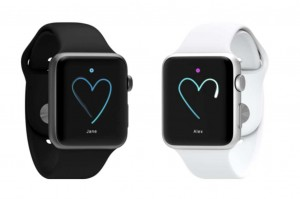
The new Tinder app debuting on Apple Watch called Hands-Free Tinder, created by developers from Austin-based integrated marketing and advertising firm T3, links a person’s heart rate to their interest in potential matches. Since pulse rates quicken when you are attracted to someone, the technology tracks this and suggests that you are a match. If there’s no quickening of heart rate? Then it’s an automatic rejection.

The process is entirely automated, meaning you don’t have to do the swiping yourself. The watch app does it for you. (Which kind of takes the fun out of Tinder, doesn’t it?) By simply looking at someone’s picture, the app will determine whether to reject or accept a match, all based on the user’s heart rate.

The Apple Watch won’t be the only wearable technology getting the new Tinder app – it will also become available soon on Google Play, so Android wearables will offer Hands Free Tinder, too.

“Swiping left and right is a thing of the past,” explained the developers to the UK’s Daily Mail. “After we found out that the Apple Watch could detect heart rate, we went to work developing hands-free Tinder. Now you can follow your heart to the right match.”

An article in Tech Times pointed out the precariousness of relying on heart rates to monitor attraction or interest in a potential date. Hands-free Tinder does not discriminate. If you are excited in that moment, whether it’s because you saw an old friend or took the first sip of a delicious drink, then your watch will right-swipe for you. The same thing goes if you are excited in a bad way, like if you witness an accident or suddenly remembered that you didn’t turn the stove off when you left the house. It will swipe right for you in these instances, too, because your heart rate goes up. So it’s important to not allow yourself to be distracted while you’re using the new app.

The smartphone helped propel online dating into the mainstream, making it easier than ever for people to choose or reject matches based mostly on a few photos. It has also encouraged our tendency toward laziness, especially when it comes to dating. Instead of manually accepting or rejecting matches, the next evolution of online dating says it will be done for us. Where’s the fun in that?

For more information on this dating app you can go ahead and read our review of Tinder.

Tinder Offers Verified Profiles Feature

Tinder
  • Monday, July 27 2015 @ 07:45 am
  • Contributed by:
  • Views: 2,606

Curious to find out if that’s really Leo DiCaprio or Hilary Duff using Tinder? Now, you can rest assured that either it’s a fake, or yes – your favorite celebrity is really on Tinder. (And maybe there’s a chance for a mutual swipe right...)

The latest update to Tinder brings with it a much-anticipated feature: verified profiles. But the verification in its current state doesn’t extend to all users. Specifically, Tinder verifies the authenticity of well-known people who are using the service, whom Tinder describes as “notable public figures, celebrities and athletes.” Following in the steps of Twitter, Facebook and Instagram, Tinder will now add the recognizable blue and white checkmark badge to all verified celebrity profiles.

Tinder has been known to have problems with spam bots and fake profiles in its database, which has raised concerns among many in terms of its cybersecurity and the potential for its users to be catfished. One example is the number of fake profiles set up by prostitutes, who offer prices for their services should you swipe right on their profile. Other red flags have been raised when some companies advertising their services began using fake profiles to entice customers, without Tinder's approval.

But the real concern among Tinder management was not the safety and security of every day users – it was the fact that celebrities weren’t getting many matches because nobody believed their profiles were real.

So, the new feature came about not because of complaints or requests from the general population of Tinder users, but at the request of celebrity clients using the service. As Rosette Pambakian, vice president of global communications and branding at Tinder, told The Huffington Post: “Many celebrities were telling us that no one believes it is really them on Tinder, so we launched verified profiles to authentic users who are notable public figures.”

So how does the verified profiles feature work? Celebrities can email verified@tinder.com to be considered for the badge, and Tinder will review requests on a case-by-case basis. If you're not a celebrity don’t try to submit one yourself, because for now, only notable public figures will be considered. But if you’re Heidi Klum or a single politician? That’s a different story.

So what does this mean for the average Tinder user? Not much has changed. While you won’t be able to tell if the average profile you are looking at is a real person or a scam, you will be able to tell if Brittany Spears or Lindsay Lohan shows up as your match. They will be marked verified.

To find out more about this service please read our review of Tinder.

Tinder, Match, and OkCupid Prepare For IPO

Tinder
  • Sunday, July 19 2015 @ 07:00 am
  • Contributed by:
  • Views: 2,823

If only all breakups ended as well as this one.

IAC/InterActiveCorp announced recently that Match.com, Tinder, OkCupid, and other dating services would become part of their own spinoff unit. The subsidiary will be called The Match Group and will be a publically traded company. Following the news, shares of IAC rose over 5%.

According to the announcement, The Match Group is likely to issue less than 20% of its common stock. The IPO is expected to be completed in the fourth quarter of this year, after which investors will be able to buy stock in the company. So far, the ticker symbol (the three-or-four letter identifications that represent companies on stock exchanges) is unknown.

The Match Group is starting out on top. IAC/InteractiveCorp is a $6 billion media conglomerate, and revenue of the new Match Group accounted for nearly one third of IAC's total revenue in the most recent quarter.

Last quarter, The Match Group reported revenues of $239.2 million, marking an increase of 13% on a year-over-year basis. Reports say Match Group’s revenues are expected to increase 18% in 2015, bringing the number to $1.24 billion.

The hope with separating the Match Group, and combining more established businesses (like Match and Meetic) with earlier stage businesses (like Tinder), is that the move will lead to significant cash flow generation and meaningful growth potential.

Or, as Chariman and Senior Executive Barry Diller colorfully put it, “I'm not a believer in simply agglomerating assets in perpetuity. I've long felt that as entities grow into size and maturity it's healthy to give them separation and independence from a mother church."

It's an exciting time for the industry, but dating services haven't always done well on Wall Street. AshleyMadison forfeited an IPO in 2011. Zoosk filed for an IPO in April 2014, but withdrew the application in May 2015. Hinge, on the other hand, skipped the IPO entirely, instead relying on raising capital from venture capitalists. In 2014, Hinge had raised $12 million.

The Match Group will also face stiff competition from other key listed players like Spark Networks and Jiayuan.com. Still, IAC believes this IPO can give new life to the Group. Estimated EBITDA for The Match Group in 2015 is $264.9 million – and that's excluding the $75 million EBITDA anticipated from Tinder alone.

A well-received IPO could not only put IAC significantly ahead of its competitors, but also serve as a litmus test for the entire dating industry.

Page navigation