Studies

Do iPhone Users Have More Sex?

Studies
  • Monday, October 20 2014 @ 07:23 am
  • Contributed by:
  • Views: 1,551
page

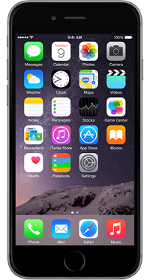
A new study by German researchers shows that men who are looking for more casual sex are more willing to spend money for the new iPhone 6 rather than purchase a cheaper Android phone.

According to website Science of Relationships, Christine Hennighausen and Frank Schwab of the University of Wuerzburg asked 350 men and women how likely they would be to buy an Apple iPhone or a Samsung Galaxy Ace. (The Samsung device sells for about 20% of the price of an iPhone.)

The experiment showed that men’s desire to purchase an iPhone depended not only on whether he was in a committed relationship, but whether he was looking for a long-term relationship or just casual one-night stands. As it turns out, men in committed relationships were no more or less likely to purchase an iPhone as compared to an Android. But single men who were looking for long-term relationships were less likely to buy that iPhone compared to single guys who were looking to score.

This phenomenon isn’t new. A few years ago, OkCupid did a study and found that daters with iPhones had almost twice as much sex as Android users. This was broken down further by gender and age, but the research was there – iPhones are definitely a sexual turn-on.

The researchers in the German study asked the participants about their sexual behavior, with questions such as “How many different sexual partners have you had in the past year?” and “With how many different partners have you had sex on one and only one occasion?” Higher numbers indicate a tendency toward flings, or a casual dating strategy.

When the researchers disregarded the men’s mating strategy, they found that uncommitted men were more willing to purchase the cheaper Samsung phone. So just because a man is single you shouldn’t assume he’s just looking to score. Apparently, his willingness to buy that iPhone depends on whether he is marriage material or prefers promiscuity. So the fact that more men seem to be buying Android phones is a good sign for ladies who are looking for long-term relationships.

The researchers found that more women in the study chose to purchase Android phones rather than iPhones, though their decisions weren’t influenced by their dating strategies as were the men’s.

Another interesting finding: single men who did purchase those iPhones tend to have them on display when there are women around them. This is not surprising in light of the findings – and the fact that those men put down a few hundred dollars to be first in line to get their shiny new devices, so they might as well show them off and see what happens.

New Study Shows that Online Relationships Fare Worse than Others

Studies
  • Tuesday, October 07 2014 @ 06:44 am
  • Contributed by:
  • Views: 2,494

Wondering if you should try online dating? Before you craft your profile, a new study by Michigan State University and Stanford found that people who met online weren’t as likely to stay together for the long-haul as those couples who met offline.

As it turns out, online dating sites who have been touting their matching success rates may not be telling the whole story. Many couples have successfully gotten together thanks to online dating, but that doesn’t mean they have lasted. The separation and divorce rates for folks who paired up online was much higher than for those who met their partners offline in more traditional ways.

According to the report, 8% of married couples who met their spouses online reported to have ended their marriage in separation or divorce, compared to approximately 2% of married couples who met their spouses offline. And compared to 23% couples who had met offline, 32% of couples who had met online had broken up in the following year of the survey.

Revisiting Race With OkCupid

Studies
  • Saturday, September 20 2014 @ 09:45 am
  • Contributed by:
  • Views: 2,611

One of the most famous posts ever featured on OKCupid’s beloved OkTrends blog was a massive examination of the ways race and ethnicity affect the online dating experience. It was one of the very first OkTrends posts ever made, way back in 2009, but the issues are still relevant today. Writer Christian Rudder has decided to revisit them in an updated post for 2014.

Back in 2009, race and attraction on OkCupid looked like this:

  • Non-black men discriminated against black women
  • But black men showed little racial preference either way
  • All women preferred to date men of their own race
  • But otherwise, they consistently discriminated against Asian and black men

So the big question is: has anything changed?

In the last five years, OkCupid users haven’t had any epiphanies of open-mindedness. In fact, Rudder notes, racial bias may have intensified a bit. See the second chart here for a demonstration.

What has noticeably changed are people's answers to match questions like "Is interracial marriage a bad idea?" and "Do you strongly prefer to date someone of your own race?" The percentage of users answering YES to those questions has been slowly trending downwards, although their actual behavior has stayed the same.

This prompts a few other questions, like:

  • Are people on OkCupid just racist?
  • Is it possible that a small number of users is throwing off the averages?
  • Does preferring to date partners of a specific race mean you’re racist?
  • Is data from an online dating site even relevant in the real world?

Rudder has all the answers.

  • No, OkCupid users are no more or less racist than anyone else. Online dating data shows consistent results where race is concerned, regardless of the dating site in question. The same basic biases can be found everywhere.
  • Again, these biases exist throughout the research on race and dating, not just on OkCupid. It therefore highly unlikely that a small portion of OkCupid users are affecting the data in a significant way.
  • You don't have control over what foods you like and which you don't, and the same goes for your personal preferences in your dating life. Most everyone has a "type" of some kind, and it probably isn't something you actively chose. However, Rudder writes, "the trend—that fact that race is a sexual factor for so many individuals, and in such a consistent way—says something about race’s role in our society.”
  • There are plenty of situations that aren't romantic that still bear a resemblance to dating. Any time you're trying to make an impression on a stranger, you're essentially going on a first date. “Beauty is a cultural idea as much as a physical one,” Rudder explains, “and the standard is of course set by the dominant culture.” So sure…it's just dating data, but it reveals our definition of beauty and that's something that affects everyone, everywhere.

Photos - The Double Standards Of Online Dating

Studies
  • Wednesday, September 17 2014 @ 07:01 am
  • Contributed by:
  • Views: 3,648

If you want to put your best foot forward and drum up the most interest from potential partners, you won't be surprised to learn that it all comes down to your profile photo.

Okay, not all of it. Some people do actually read the words you painstakingly chose. But let's be real: the profile pic is the first thing someone sees, and it has a lot to do with how well you sell yourself online.

Before you start contemplating plastic surgery, remember that the perfect profile picture isn't about conventional beauty. There are plenty of other factors that go into a photo that catches eyes, and none of them have to do with how well you apply eyeliner or how much time you spend in the gym.

Zoosk conducted a study of 4,000 online daters and discovered some of the more unexpected elements that attract attention online:

  • Yes, your pet is cute, but your furry friend is not helping you find a date. Photos with animals lower the average number of messages received by 53% for both men and women.
  • Posing with human friends also lowers your average – by 42%.
  • Women get a 60% boost in messages received if their profile picture is taken indoors.
  • On the other hand, men get 19% more messages if their photo is taken outdoors.
  • A full body shot is must, regardless of your gender. It'll give you a 203% bump in your incoming messages average.
  • Ladies: your selfies earn you 4% more messages. Gentlemen: sorry, your selfies lower your incoming average by 8%.

What you're seeing here are some similarities, but also a couple of key differences. Take that last one: why is it we think it's normal for women to take selfies, but think it's vain for men to do the same thing? Shocker – we have double standards were beauty and gender norms are concerned.

Those double standards continue into the text of the profile. Zoosk's research came to the unsettling conclusion that honesty is the best policy for men, but that women should keep their mouths shut about the big issues until later on. Looking at the data, Zoosk found that:

  • The words "separate" and "divorce" up men's incoming messages by 52%. Mentioning children means another 7% boost.
  • For women, on the other hand, mentioning the same words causes the incoming messages average to drop by 7%.

So what does that mean? Does that mean women should hide their pasts while men should celebrate them? Does it mean that online dating is fundamentally broken?

What it really means, more than anything, is that online dating sites serve as a microcosm of society as a whole. Regardless of gender, double standards are firmly in place – and we'll never beat them online until we beat them offline.

For more on the dating site that commissioned the study you can read our review of Zoosk.

OkCupid’s Christian Rudder Releases New Book, ‘Dataclysm’

Studies
  • Sunday, September 14 2014 @ 09:14 am
  • Contributed by:
  • Views: 1,616

If you were a fan of the OkTrends blog – and let’s be real, who wasn’t? – your day is about to get a little better. Though the brilliant blog is no more, its writer, Christian Rudder, has plenty more to say on the subject of the human side of Big Data. He has just released a new book that explores who we are in a world in which we make an increasing amount of data about ourselves available online.

The book is called Dataclysm: Who We Are (When We Think No One’s Looking). Sites like OkCupid collect vast amounts of information on their users in order to provide better service, and in doing so raise some interesting questions. Rudder believes the info isn’t just useful for the websites – he also believes it may change the way we see ourselves.

That being said, he readily admits that data isn’t everything. "Look,” he told NPR's Arun Rath, “there's no way OkCupid, Facebook, Twitter, these sites even added all together can stand in for the entirety of the human condition. People do all kinds of things they don't do online." But it would be silly to let all that data go to waste, wouldn’t it?

Rudder has examined everything from age, to race, to gender, to language, to attraction. His findings are consistently fascinating for both data geeks and non-data geeks alike, such as:

  • There is a strong bias against African American users on online dating sites. They are rated lower, receive fewer messages, and are less often replied to than people of other races. Online daters of both genders tend to prefer to date within their own racial or ethnic group.
  • Contrary to popular belief, women don’t prefer older men. Until women reach the age of 40, they are more interested in men in their age range. On the other hand, men across the board show a preference for younger women. 20-year-old female users were reliably rated highest by men of all ages.

As fascinating as Rudder’s analysis is, it has its limitations. There are potential hazards to taking consumer data collected for a specific purpose and using it to extract meaning about something else. Data also isn’t necessarily indicative of behavior. In the case of OkCupid’s users, it may measure opinions but not actual actions. Still, Rudder firmly believes collecting this kind of information is worthwhile.

“I definitely think it's good,” he told NPR. “When you put all this stuff together, you're able to look at people in a way that people have never been able to look at people before. ... You have millions and millions of people living their lives through an interface that records what they're doing as they live. ... It's the beginning of, I think, a revolution in how social science and behavioral science are done.”

CoFounder of OkCupid Launches a New Book Mining User Data

Studies
  • Tuesday, September 09 2014 @ 07:07 am
  • Contributed by:
  • Views: 1,471

Ever wanted to get inside the minds of thousands of daters to see what makes everyone tick? Maybe that seems cool, or maybe you’d rather sit in a dentist’s chair for five hours, but either way – it does make you curious.

So it’s no surprise that OkCupid Co-Founder Christian Rudder has decided to harness the power of OkCupid’s user data and create a book that piques our curiosity. After all, we all watched with fascination as the dating site’s blog OkTrends revealed its latest research, informing us of what types of people we are attracted to, we’re doing wrong in our online dating profiles, or how to effectively message other users. Rudder found interesting trends in the details, helping us ask questions we didn’t even know to ask. For instance, why does the angle of the camera matter in a photo, or how you smile? Why is it preferable to write a less descriptive profile? Why is it more attractive to have a guitar in your hand than a tennis racket, or possess an unusually-shaped nose than to be considered average-looking? Or the million-dollar question: what do people lie about the most when they are online dating?

OkCupid has given us the sometimes surprising preferences of online daters, based on all of the data they mine from their thousands of users. Because of the site’s format of creative questions and answers, it’s allowed them to dig deeper than most.

OkTrends has been on hiatus since 2011, when Rudder started taking the information to compile it into a book, rather than just posting the information for free on their website. Rudder’s new book is called Dataclysm: Who We Are (When We Think No One’s Looking), which comes out on Sept. 9 and examines interactions for insights into whom and how we date.

For one of Dataclysm’s studies, Rudder analyzed how men and women approach attraction. It turns out that as women get older, they like older men. Men, on the other hand, consistently prefer younger and younger women. Men will message women close to their own age, but only up to a point. For example, men in their mid-40s rarely talk to women older than 30. “We have a lot of serial daters on the site—men who just keep dating women 10 years younger than they are,” Rudder told Business Week in a recent interview. “Eventually their tactics start to fail, and the young ladies they’re messaging begin rejecting them. The result is a lot of 40-year-old men and women who find it hard to get a date.”

OkCupid isn’t worried about user backlash for mining their personal data. Rudder recently wrote a post to address this issue, pointing out that all websites experiment on users, admitting that OkCupid once tested its matchmaking algorithm by telling users who were not suited for each other that they were a near-perfect match. “We got maybe five complaints,” Rudder told Business Week.

Since OkCupid users don’t pay for the site or its advice, does Rudder have an audience willing to buy his book? We’ll have to wait and see.

Check out our review of OkCupid for more information on this popular dating site.

Page navigation