Scams

Scammers Used Dating Apps to Sell Fake Cryptocurrency

Scams
  • Monday, November 01 2021 @ 06:13 pm
  • Contributed by:
  • Views: 937
Scammers using Crypto Currrency Scheme on Dating Apps

Scammers stole more than $1.4 million from users of popular dating apps like Tinder, Grindr and Bumble, among others. Dubbed “CryptoRom” by cybersecurity research firm Sophos, the attackers feigned romantic interest with victims to build trust, and then lured them into downloading fake cryptocurrency apps.

According to reports, these scammers used Apple’s Enterprise Development platform to push the fake cryptocurrency apps, which gave the victims a sense that they were legitimate, but in reality, this allowed scammers to bypass the normal app review process. 

The CryptoRom attackers set up fake profiles on dating apps and strike up conversations with users, later moving them to messaging apps. After a time, the subject of cryptocurrency is introduced into the conversation, and the scammer asks the victim to install the fake crypto trading app to make an investment. At first, the victim makes money and is allowed to withdraw from their account, providing a false sense of security. Soon after, they are asked to make a more substantial contribution, and if they do, the scammers not only refuse their withdrawal requests, but blackmail them to invest more and take the money they already paid if they refuse.

FTC Warns LGBTQ+ Dating App Users About Growing Threat of Scammers

Scams
  • Friday, October 01 2021 @ 10:57 am
  • Contributed by:
  • Views: 8,345

The FTC in mid-September issued a statement urging people using LGBTQ+ dating apps to be cautious amid the growing number of scammers who operate on these apps.

Apps like Grindr and Feeld were named in particular as the FTC warned of an increasing number of scammers who seek explicit photos and then use them to extort money. According to Consumer Reports, the attackers pose as interested romantic partners and chat with intended victims. These scammers send explicit photos quickly, seeing who responds with a similar photo in return.

The next part plays out like an episode of Black Mirror, where if the victim does send an explicit photo in hopes of connecting in person, the attacker quickly turns on them and uses blackmail to extort money. The attackers threaten to send the photo to the victim’s personal networks, including family and friends or even an employer unless they pay (usually via gift card). 

Tinder Rolling Out Global ID Verification

Scams
  • Monday, September 06 2021 @ 11:24 am
  • Contributed by:
  • Views: 1,020

Tinder announced that it will roll out its ID verification system worldwide so users can verify their ages. This follows the app’s photo verification feature to address the issue of eliminating fake profiles propagating the app.

ID verification will be prominently displayed on a user’s profile, similar to the blue checkmark currently used for a verified photo, according to Tech Crunch.

Tinder began beta testing ID verification regionally in 2019 and said it will be rolling it out worldwide over the next few quarters. In most countries the service will be voluntary, at least for now, to address the challenge of underage people using the app. However, in places like Japan where it’s against the law for people under 18 to use dating apps, verifying ages will be mandatory. The feature will be free to use.

Apple Pulls Dating App for Unvaccinated People 

Scams
  • Saturday, August 21 2021 @ 07:16 am
  • Contributed by:
  • Views: 1,134
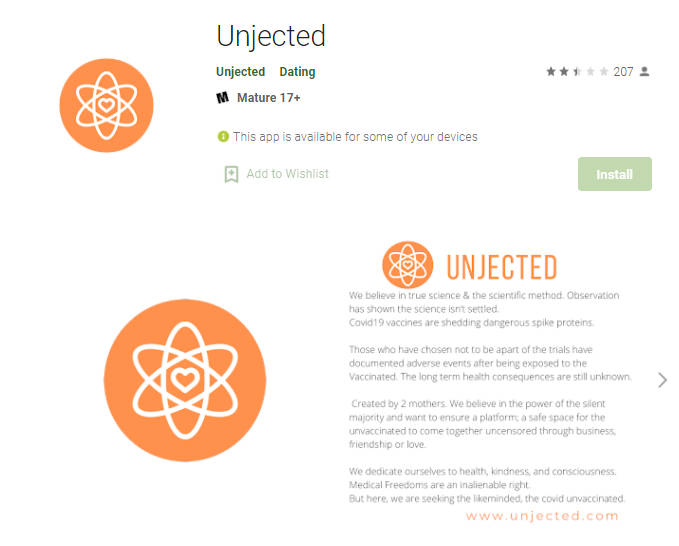
Unjected on Google Play Store

Apple has pulled a new dating app for unvaccinated people from its store, stating that the app was spreading misinformation about Covid-19 and vaccines.

According to PC Magazine, the app “Unjected” was initially reported to Apple by Bloomberg, who contacted the company when the dating app added a new social feature where users could publish their own posts. Many Unjected users began to add content containing conspiracy theories and misinformation about the pandemic and vaccines. This violated app store rules, which bans entertainment and gaming apps from using Covid-19 as a theme.

Apple told PC Magazine that Unjected broke other app store rules, too, namely by telling its users to avoid certain Covid-related words like “vaccine,” “jabbed,” and “microchip” because this might lead to the app being flagged and potentially banned from the store, which eventually it was.

New Study Shows Dating App Users Remain Concerned About Security

Scams
  • Friday, August 13 2021 @ 08:13 am
  • Contributed by:
  • Views: 12,626
Dating App Security

A new study from Pew found that almost half of dating app users still have concerns about safety and security, even as popular apps are starting to address these concerns with features like background checks.

According to the study, 46 percent of Americans view dating apps to be unsafe, for three main reasons. They are primarily concerned with other app users lying and misrepresenting themselves, as well as with people who set up spam accounts. They are also concerned about receiving unsolicited explicit messages or photos, all pervasive problems.

Apps have begun to address these issues. Tinder launched a background checks feature in recent months so users could check out matches before agreeing to meet. Dating conglomerate The Meet Group debuted face verification badges that are powered by AI technology, so that users could offer verified profiles. Bumble also debuted a new feature that uses AI technology to blur unsolicited photos that contain graphic and lude images, so its members don’t have to see the photos in order to report them.   

Tinder Debuts Feature to Stop Harmful Messages Before They Are Sent

Scams
  • Monday, May 31 2021 @ 09:40 am
  • Contributed by:
  • Views: 1,732

Dating app Tinder unveiled a new feature as part of its effort to step up safety measures on its platform. “Are You Sure?” or the AYS? feature will deliver a pop-up to question a user before they send a potentially harmful message.

According to Mashable, AYS? utilizes AI in real time to detect inappropriate language, based on what users have reported to Tinder in the past. When a user types a message that is flagged or noticed by the AI, an AYS? prompt will automatically appear before the user can press “send.” According to Tinder, in early tests this feature reduced harmful language in messages by as much as 10 percent. The company also said that members who saw this pop-up were less likely to be reported for sending inappropriate messages, an indication that it could curb this behavior.

The goal with using an AI-driven feature is that it will improve and become more effective in countering harmful messages over time as it gathers more input.

Page navigation