Photos

Dating App Users Want Digital Consent When Communicating with Matches

Photos
  • Thursday, May 19 2022 @ 08:08 am
  • Contributed by:
  • Views: 775
Women upset over Photo on Phone

Many dating app users have complained about getting unsolicited nude photos, and are now demanding digital consent before a communicating with a match.

Dating apps have been struggling with what to do about this issue for a while, but since the pandemic attracted many new users to dating apps, the problem has grown. According to The New York Post, A World Wide Web Foundation survey found that 52 percent of young women and girls said they had experienced online abuse, including threatening messages, sexual harassment and being sent lewd photos without consent. A whopping majority of 87 percent said they believe the issue is only getting worse. 

Dating app Bumble launched a feature called Private Detector to counteract this problem. Private Detector works with AI to detect when a nude photo is sent and blurs the picture before the recipient can see it, allowing them to block and report the user without having to see it first.

Sending Unsolicited Nude Photos Will be Illegal in Virginia Thanks in Part to Bumble

Photos
  • Wednesday, May 04 2022 @ 04:07 pm
  • Contributed by:
  • Views: 971

Dating app Bumble has been urging states to pass bills similar to the one it initiated in Texas, which makes it illegal for people to send unsolicited nude photos electronically. In mid-April, Virginia passed such a bill into law.

According to the new law, any adult sending an unsolicited “intimate image” electronically to another adult could be fined up to $500. The law defines intimate image as a “photo, film, video, recording, digital picture or other visual reproduction of a person 18 years of age or older who is in a state of undress so as to expose the human male or female genitals.”  

USA Today spoke with Bumble about how company's head of public policy for the Americas, Payton Iheme, reached out to Virginia Senator Jennifer McClellan for help with the legislation, since the company had success a few years ago passing a similar bill in Texas. The Virginia Senate had voted down another lewd photos bill two years before that carried criminal penalties, but since the new bill introduced civil penalties only, lawmakers felt more comfortable passing it into law.

Ukrainians Use Tinder to Counter Russian Propaganda

Photos
  • Friday, April 15 2022 @ 09:39 am
  • Contributed by:
  • Views: 831
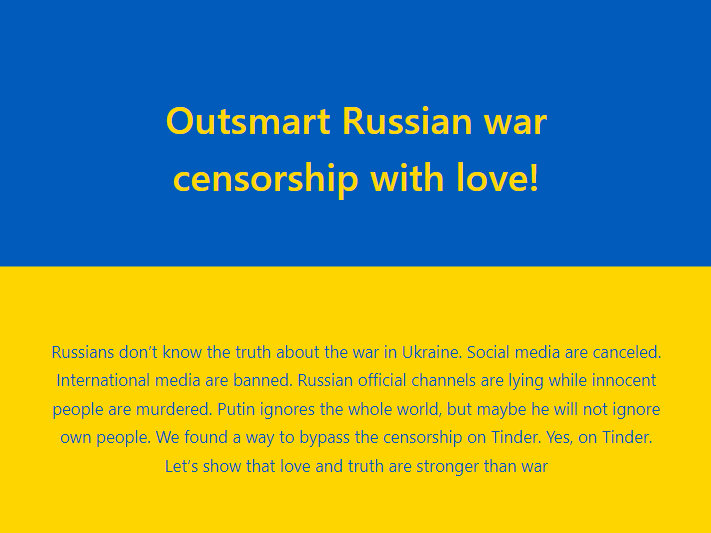
Special Love Operation Message

As Russia bans more social media platforms, Ukrainians are turning to dating app Tinder to break through the country’s propaganda network.

The U.K.’s Express said that Ukrainians are using Tinder’s Passport feature to match with Russians, and then sharing images from the war over the app to counteract Putin’s propaganda campaign. Russians have been told via state TV that there is no war, and that Russia is “liberating” people in the Ukraine. Putin has banned the use of Facebook, Twitter, and Instagram in an effort to control the narrative.

A Slovakian media agency noted the trend in Tinder and is making it easier for Ukrainians to participate by launching its “Special Love Operation” movement that encourages people to match with Russian singles and flood them with images from the war in Ukraine, so they know what is actually happening. 

Tinder Rolls Out Blind Date Feature

Photos
  • Friday, March 04 2022 @ 08:37 pm
  • Contributed by:
  • Views: 1,228
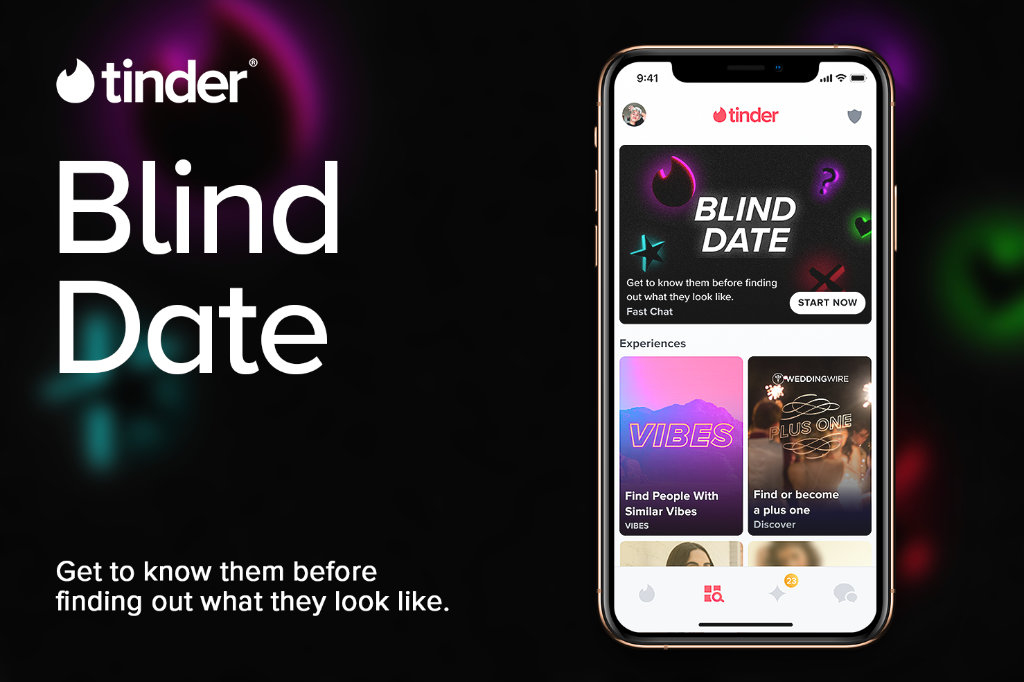
Tinder Blind Date Feature shown in Explore Section.
Image: Tinder

Dating app Tinder is rolling out another interactive feature for its Explore section. According to the company’s blog post, Fast Chat: Blind Date will allow users to chat without being able to see each other’s photos, so they focus on personality instead of image. 

When users opt in to the Blind Date feature, they are asked to complete a series of questions, and are paired with others based on similar responses. The questions are meant to spark conversation in an ice-breaker style, like “I put ketchup on___.” The two daters then start a timed chat in which they receive the responses as prompts, so they can have a little fun with awkward first conversations. 

When the chat time ends, they can like the other person’s profile and if they both match they can see each other’s photos and continue talking or messaging, according to the company's blog

South Korean Dating Apps Restricting Masked User Profiles

Photos
  • Wednesday, February 09 2022 @ 10:57 am
  • Contributed by:
  • Views: 1,470
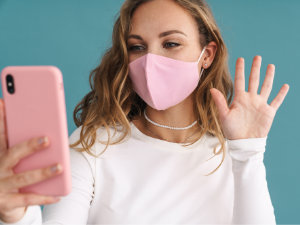
Masked Woman on Dating App

After receiving numerous complaints from their users, dating apps in South Korea are cracking down on users who mask up in their profiles in an attempt to hide their faces.

According to The Korean Herald, this practice has become known as “magikkun,” from the English word “mask” and the Korean word “sagikkun,” which means fraud. People who use masks in their profile photos are assumed to be deceiving potential matches, because they are hiding what they look like in real life. 

Some users are avoiding swiping right on masked-up profiles altogether, where others use video chat or request a selfie from the user before agreeing to meet them in person.

Bumble Advocates Making Cyberflashing Illegal in UK

Photos
  • Monday, January 31 2022 @ 09:21 am
  • Contributed by:
  • Views: 698

Dating app Bumble said that it is actively campaigning to make cyberflashing illegal in England and Wales, as it continues to fight for policies to protect women on dating apps.

The term cyberflashing is used when someone (typically a woman) receives an unsolicited explicit photo via a messaging app or Airdrop. According to a study by YouGov in the UK, 41 percent of women aged 18 to 36 have been sent an “unsolicited photo of a man’s private parts.” This is illegal in many places, but not currently in England or Wales. 

In its own research, Bumble found that 48 percent of women ages 18 to 24 had received an unsolicited and explicit photo just in the last year, with 25 percent saying they felt violated because of it. A majority of almost 60 percent said they felt less trusting of others they interacted with online after the experience, and one quarter said that this occurrence has increased over the course of the pandemic, according to Mashable.

Page navigation